
Machame is called the Whiskey Route not because you need a drink, but because it challenges you like a good, strong conversation with the mountain. Our guides have walked it over 300 times combined. We know exactly where to slow down, where to push, and where to make you stop just to stare.
The 7-day Machame Route gives you one extra night compared to the standard 6-day version. That one night? It dramatically increases your summit success. You sleep at Karanga Camp (instead of pushing straight to Barafu), giving your body precious extra hours to adjust to altitude.
What makes our Machame different:
- Acclimatization hike on Day 4 before reaching Karanga
- Oxygen cylinder and pulse oximeter checked every evening
- Hot meals cooked fresh – not reheated freeze-dried food
- Fair wages + proper gear for every porter (we are KPAP registered)
Day One
You leave Arusha around 8am. The drive to Machame Gate takes about 2 hours – tarmac then dirt, getting bumpier as Kilimanjaro grows larger through the window.
At the gate, your crew handles everything. Park registration, gear checks, porter weight verification (because we treat them fairly). You? You sip chai from a thermal flask and watch the chaos with calm.
The hike begins after lunch. The rainforest is damp, green, and alive with colobus monkeys – their white tails flashing like flags. The trail is muddy if it rained (it usually rained). Your guide sets the rhythm: pole pole – slowly slowly.
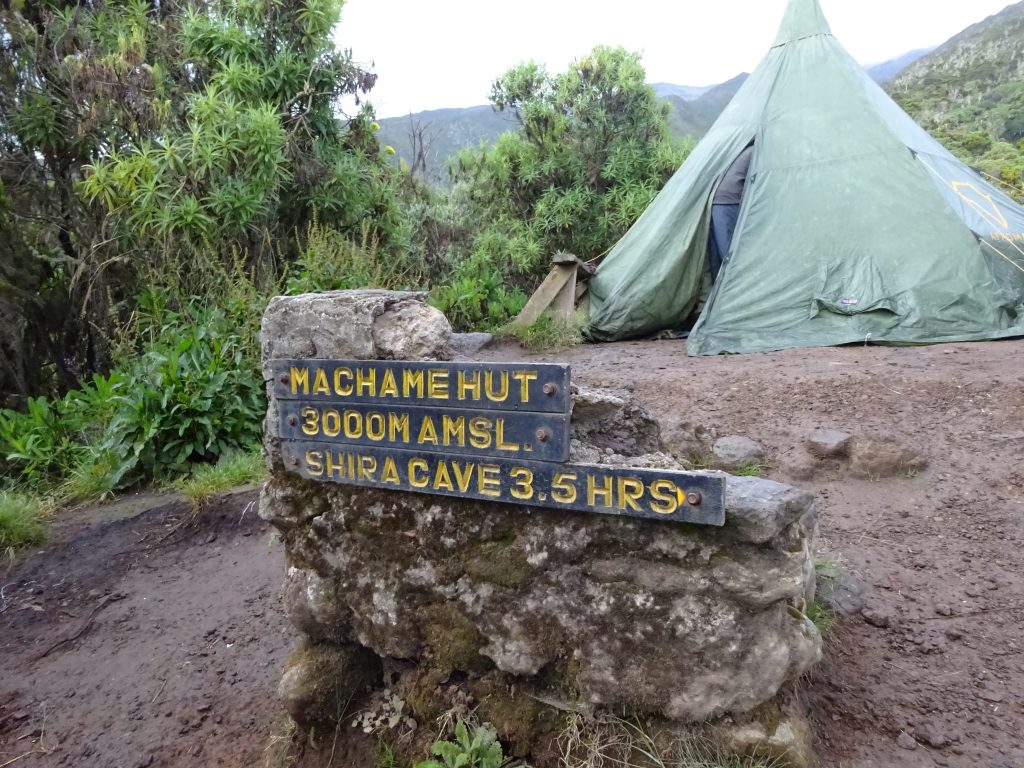
By late afternoon, you break through clouds and see the first sliver of Kilimanjaro’s peak. Machame Camp sits on a ridge with views across the valley.
Your sleeping bag is already inside your tent when you arrive. Hot washing water comes at 6pm. Dinner is served in the mess tent – not a tray dropped at your tent door.
Day Two
Today is short in distance but steep. The rainforest disappears within the first hour – replaced by heathland with giant lobelias and groundsels that look like something from Jurassic Park.
You climb the “Kiss Rock” (your guide will explain the name – it involves a local love story) then traverse the Shira Plateau. This is one of Africa’s largest high-altitude plateaus, formed by a collapsed volcanic crater.
Shira Camp is wide, windy, and wonderful. You arrive by early afternoon. The rest of the day is for resting, drinking water, and watching clouds boil below you.
Day Three
This is the most important acclimatization day on the entire route.
You climb steadily to Lava Tower (4,600m) – the highest point you will reach before summit night. You have lunch here, in the cold, thin air. Then you descend to Barranco Camp.
Descending after high exposure is what triggers your body to produce more red blood cells. That is the science. The result? You sleep better and summit stronger.
Barranco Camp sits at the base of the Barranco Wall – a 300m rock face you will climb tomorrow morning. It looks impossible from below. It is not. Your guide will show you exactly where to place your hands.
Day Four
Morning starts with the Barranco Wall. It is a scramble, not a climb – but your heart will race. Three hundred meters of rocks, ledges, and moments where you look down and feel very alive.
Your guide goes first. Then you. The porters have already passed you carrying 20kg loads. Do not be humbled – be impressed.
At the top, you walk along the Karanga Valley ridge. The views of Kibo’s glaciers are uninterrupted. By noon, you reach Karanga Camp.
And here is why we chose 7 days: instead of pushing to Barafu (tired, dehydrated, at 4,600m), you rest at Karanga. You take an acclimatization walk in the afternoon – up a small hill, then back down. Your body thanks you overnight.
Day Five
A short hiking day by design. You leave Karanga after breakfast and walk across rocky, dusty trails toward the shadow of Kibo.
Barafu Camp means “ice” in Swahili – and it is cold, exposed, and stark. There is no beauty here. Only purpose. You are 4,600m above sea level. The summit is 1,300m above you.
Rest schedule:
- Rest schedule:
- Arrive by 11am
- Lunch at 12:30pm
- Sleep from 2pm to 5pm (you will not really sleep – but try)
- Early dinner at 5:30pm
- Final gear check at 6pm
- Rest again until 10:30pm
- Wake up at 11pm
- Depart for summit at 11:30pm
Day Six
You walk in darkness. Headlamps make a chain of lights up the mountain – hundreds of climbers from dozens of teams, but you only see your guide’s boots and the person in front of you.
The first 3 hours are steep volcanic scree. Two steps forward, one half-step slide back. It is frustrating. It is cold. Your legs are tired before you even reach the real climb.
At 5,150m (Cumulative Summit – also called “Stella Point” on the Machame route), the sky begins to lighten. If you have made it here, you will make the summit. Most failures happen before Stella Point.
From Stella Point, it is 45–60 minutes along the crater rim to Uhuru Peak (5,895m). The glacier is on your left. The sunrise is on your right. And then – you are there.
You stay 10–15 minutes. Photos. Tears. Hugs. Then down.
The descent to Mweka Camp is long and hard on knees. You will be exhausted but euphoric. By late afternoon, you reach Mweka Camp (3,100m), where hot soup and your last mountain sunset wait.
Day Seven
Ready to climb?
The final walk is through rainforest – muddy, slippery, and joyful. Your knees will complain. Your heart will not.
At Mweka Gate, you sign out with the park authorities. Your crew gathers to sing the Kilimanjaro song. This is emotional. Bring cash for tips (we will give you recommended amounts before the climb).
The vehicle takes you back to Arusha. By 1pm, you are at your hotel. Hot shower. Cold drink. And the quiet knowledge that you stood on the roof of Africa.